Musical Theatre Audition Requirements
Applicants to the Musical Theatre specialization within the Theatre BFA are required to complete an audition as part of the admission process. Your audition gives us the opportunity to learn about your artistry, performance skills and creative potential in acting, singing and movement. If you are applying to the Theatre BA, an audition is not required, and admission is based on the university’s standard application requirements.
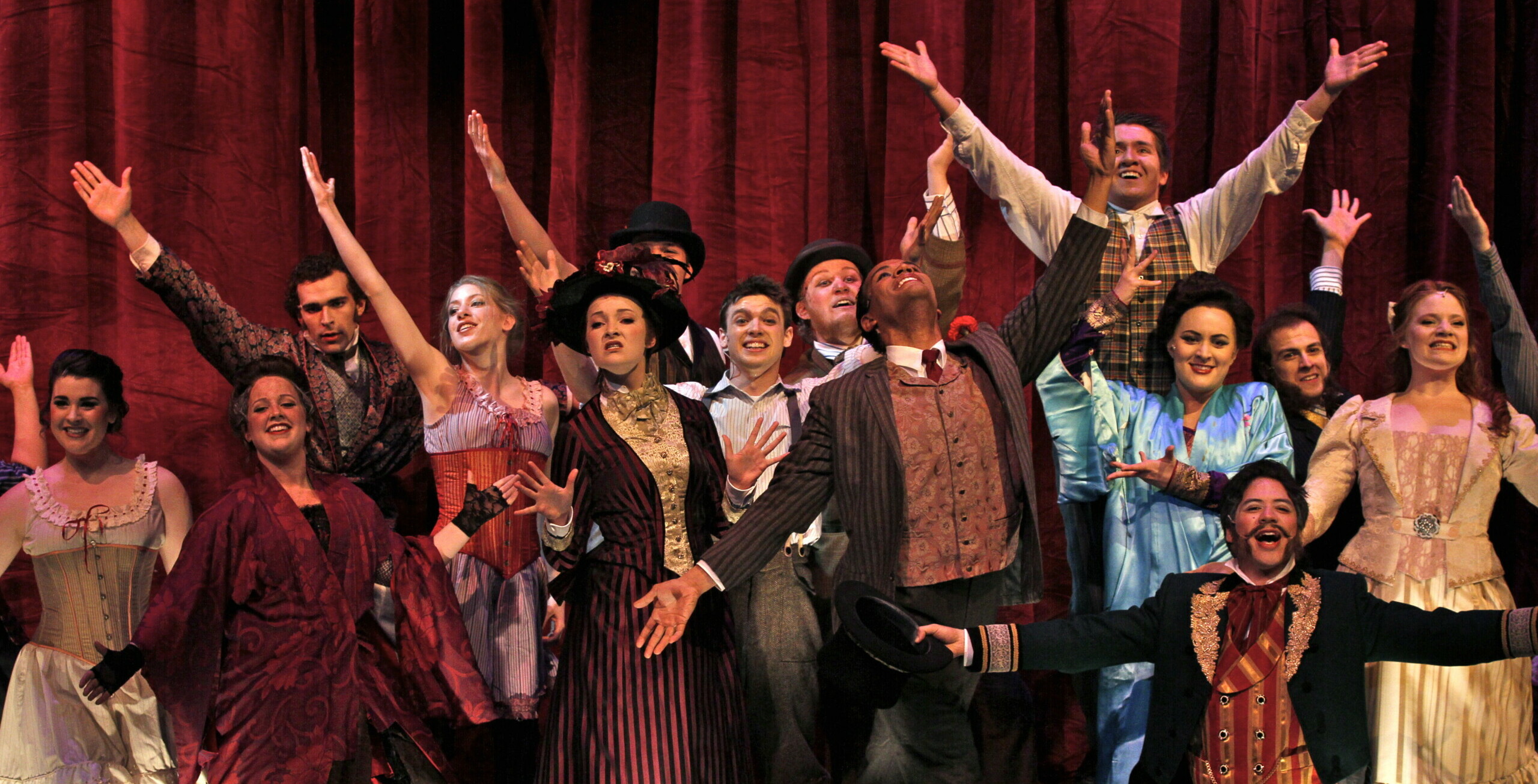
You may audition in person or submit a recorded audition through your Redhawk Admissions Portal. The audition includes a monologue, two contrasting songs and a dance call. An optional Wild Card video may also be submitted to showcase additional talents or creative work beyond the required audition materials.
| Application Round | Application Due Date | On-Campus Audition Date | Recorded Audition Due Date |
| Early Application (Fall 2027) | November 1 | November 14 | November 14 |
| Regular Decision (Fall 2027) | January 15 | January 30, February 13 | January 30 |
| Spring Semester (Fall 2027) | November 1 | November 14 | November 14 |
Application steps:
- Apply to Seattle University using the Common Application. You’ll choose your Cornish major in the application.
- Submit your application.
- Within 24-48 hours, you will receive login credentials for your Redhawk Admissions Portal.
- Log into your Redhawk Admissions Portal to register for an on-campus audition, sign up for an off-campus audition event, or let us know you’ll be submitting videos for your audition.
- If you choose to submit a video audition, use the Portfolio section in your portal to upload your videos. Please refer to the audition requirements for your chosen major.
- Once you’re done uploading your videos, fill out the Portfolio Completion form in your portal to let us know that your videos are ready to be reviewed by our faculty.
In-Person Musical Theatre Audition Guidelines
The Cornish Musical Theatre Program participates in The Musical Theatre Common Audition/Prescreen Requirements which are a standardized set of criteria agreed upon by participating institutions to streamline the audition and application process for both students and schools. The guidelines help ensure a fair and inclusive admittance process across all participating programs.
Requirements:
- A monologue from a published play
- Two contrasting songs
- Dance call
- OPTIONAL: Wild card video of additional talents and skillsets
MONOLOGUE REQUIREMENTS
Applicants are required to prepare and perform one monologue from a published play or one written by a professional writer. A professional writer is defined as someone whose plays have been produced, even if they have not been professionally published.
While not mandatory, we recommend selecting one of our prescribed pieces (options below). Choose the piece you feel the strongest connection to, and be sure to read the entire play beforehand, because we can tell when you haven’t.
If you don’t have enough time to prepare one of our recommended monologues, you may choose a piece from a play you are familiar with. The monologue you select should have a strong objective that allows you to engage in actions that connect with another character. We also suggest choosing a contemporary monologue, meaning the play was written after 1950. Most importantly, select a piece that you genuinely enjoy performing.
Monologue Options:
CLICK HERE for Option 1 | Fool for Love, by Sam Shepard
CLICK HERE for Option 2 | Death of a Salesman, by Arthur Miller
SONG REQUIREMENTS
Each applicant will prepare two contrasting songs. We recommend that one song be from a musical in the “Golden Age” style (this can be a contemporary song with a classical feel), and the second song can be from a contemporary musical. Each song should be 16 to 32 bars in length (verse and chorus). Choose songs that not only contrast but also showcase your vocal range. The songs should allow you to play an action and focus your energy outward rather than inward.
DANCE REQUIREMENTS
Applicants to our Musical Theatre BFA program are asked to attend a dance call if auditioning in person or submit a recorded dance audition in the “Portfolio” section of their Redhawk Admissions Portal.
WHAT TO PREPARE:
- 60-90 seconds of choreography in the dance style you are most comfortable with. This could be ballet, jazz, contemporary, African, East Indian, Brazilian, or another style.
- Stick to vocabulary and steps you know well and can execute confidently.
- All choreography must be performed to music; no “a cappella” dance media, please.
- Your choreography should be story-driven, allowing you to express a goal or objective.
- Include at least one turn, one jump, and one kick (or other suitable rotation, elevation, and extension that works for your body).
OPTIONAL:
While not required, we highly recommend showing us your best ballet technique. Include a brief series of plié, tendu, and grande battement, a pirouette en dehors (to both sides), and one or more grand jeté across the floor. You may use music if you like.
Recorded Auditions
If you cannot audition in person, you may submit a video audition through your Redhawk Admissions Portal using the requirements above. In addition, applicants must answer the following interview-style questions in a video:
- Why do you want to study at Cornish? What excites you about our program?
- Imagine that you received a grant to produce a play that you would either commission or write yourself. It could be in the theatre of your choice, with the cast of your choice. The only condition is that it must be about some issue—personal, social, political, environmental—that you care strongly about. What would you want your play to be about, and what would you want the audience to take away from the experience of seeing your play?
Frequently asked questions:
How do I choose a strong monologue?
Avoid “Story” Monologues: Select monologues where the character is actively pursuing a goal rather than simply telling a story or recounting events.
Strong Character Objective: Choose a piece where your character has a clear and compelling objective. This will allow you to perform actions that directly connect with another character who is present in the scene.
Dynamic Actions and Tactics: Your monologue should enable you to engage in dynamic actions and explore different tactics to achieve your character’s objective. This showcases your ability to make strong choices and adapt your approach throughout the monologue.
Transformation: By the end of the monologue, someone—whether it’s your character or the other character in the scene—should be changed in some way. This could be a change in understanding, emotion, or decision, but it’s crucial that there is a shift.
Do I need to perform with an accompanist?
Applicants for our Musical Theatre BFA will be expected to perform their songs with accompaniment. If you are auditioning in person, an accompanist will be provided, so please bring your sheet music in a binder and in the correct key.
For those auditioning live virtually, you may use a live accompanist if you prefer, but recorded accompaniment is also acceptable. If you choose a recorded accompaniment, a personal Bluetooth speaker is recommended for the best sound quality.
How do I record a great audition video?
- Record your audition in a neutral open space. This can be a classroom or rehearsal space if you have access to one. If not, a living room or bedroom with furniture moved to provide ample space to perform will work just fine. Try your best to neutralize the space; meaning that walls should be bare (can easily cover with a sheet of fabric), and furniture is moved out of the way so that you have ample space to work.
- Make sure that the acoustics are good enough for you to sound clear (no rooms with a strong echo)
- Make sure that there is sufficient light. This means that your face and body are fully visible.
- DO NOT wear costumes or use character makeup. Dress in an elevated version of your specific style.
- DO NOT use background sound effects or virtual backgrounds.
Filming guidelines for recorded dance calls:
- The dance should be filmed in a full-body shot, ensuring your entire body always stays in the frame.
- You may use a dance studio, black box, or rehearsal hall, but we understand that not all students have access to these spaces. If your space is limited, make the best of what you have. Imagine it as a live audition where you are given an improvisational score to work within a confined space. This mindset can help as you film your audition.
What should I include in a Wildcard video?
While not required for consideration, we welcome you to upload a video that showcases additional skills and interests that we do not ask for in our audition requirements.
For example, if you are a student interested in creating original works, we encourage you to submit a short video excerpt of a play or musical you directed, a sample from a play/text that you have written, a self-written spoken word sample, a devised solo piece, or something similar. You could also showcase additional skills like instruments you play, tap, tumbling, flexibility, etc.
Feel free to include this additional material in the “Portfolio” section of your Redhawk Admissions Portal. This is completely optional, and choosing not to submit additional material will not affect our consideration of you for the program.